

Table Of Contents
A gutter can look cleaner without the blockage being fully addressed. The sections most easily missed are often the narrow spaces, outlets and downpipes that control how water leaves the roof.
From Dylan's experience, the useful question is not simply whether someone removed the leaves. It is whether the work addressed the parts of the drainage path included in the clean and documented what remained.
Expert insight from Dylan Howell, Director of Australian Gutter Cleaning Co., with 15 years in roofing and eight years in gutter cleaning. Updated 28 October 2026.
Only cleaning the easy-to-reach sections
Debris can compact where roof edges leave little working room. These tight areas need attention even if the open middle of the gutter looks clear.
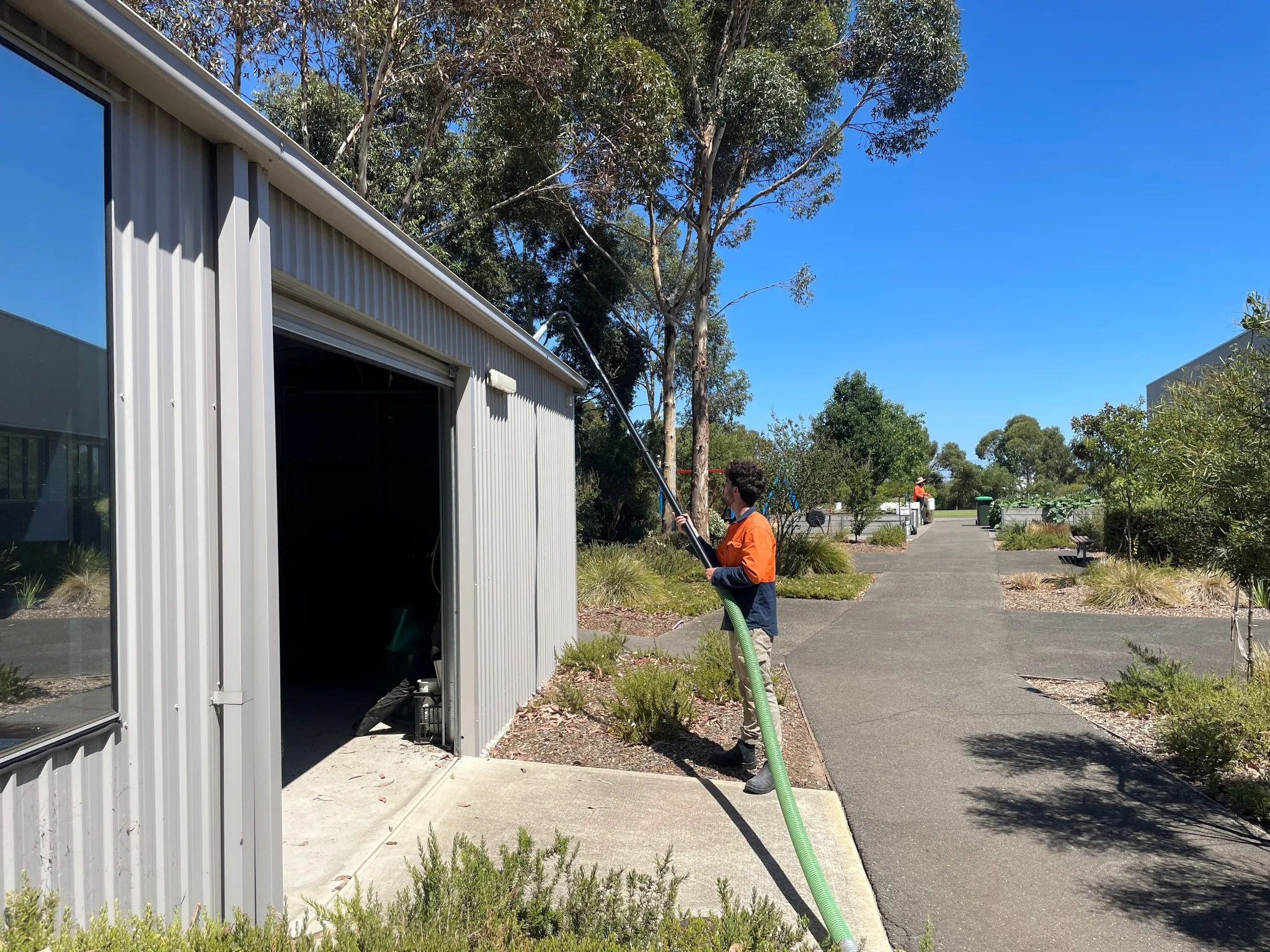
AGCCO uses specific crevice tools with its industrial vacuum equipment to reach narrow sections. We clean the property's gutters and accessible downpipes within the agreed scope, rather than treating the obvious pile of leaves as the whole job.
Access limitations should be explained. If a particular area cannot be reached safely, that needs to be identified rather than silently left out.
Leaving a blocked downpipe untreated
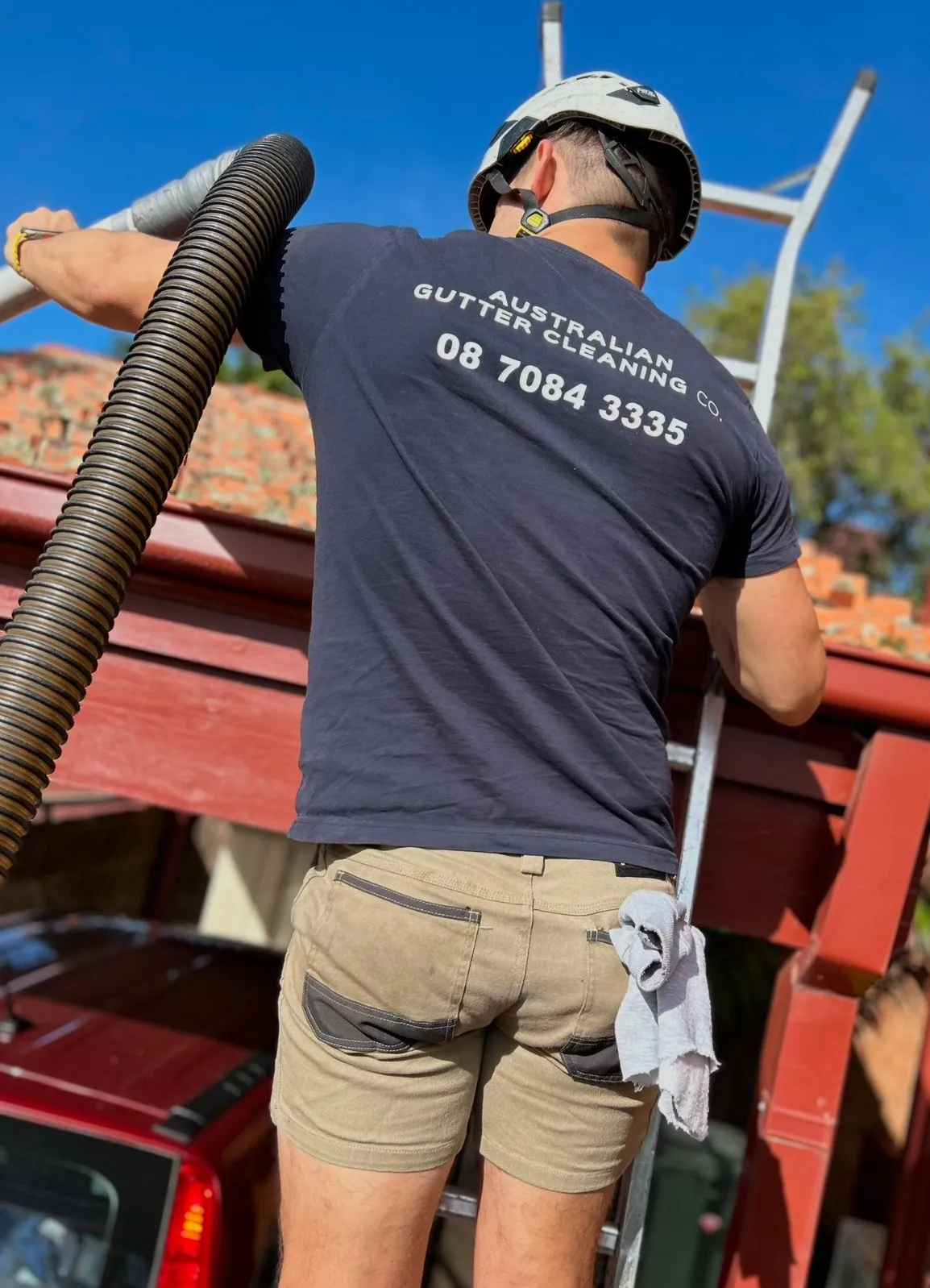
Removing gutter debris does not resolve an obstruction further along the drainage path. Our process includes air-flushing accessible above-ground downpipes using the industrial vacuum equipment.
Dylan finds rectangular downpipes particularly prone to blockages on the properties he services. Other objects can obstruct an outlet too: one AGCCO job revealed a ball lodged at the downpipe opening.
An underground blockage needs a plumber. The important distinction is to identify that next step rather than imply that a routine gutter clean can solve every drainage problem.
Assuming gutter guard removes the need for cleaning
Material can accumulate beneath gutter guard. Clearing the top surface does not necessarily clear what has collected in the gutter below.
Our initial gutter guard quote covers a top clean. We assess beneath the mesh on the day and explain any additional lifting and cleaning required. Satellite images cannot establish the hidden condition.
For most fitted systems, we recommend maintenance every six to twelve months, adjusted to the property. Read what under-mesh cleaning involves.
Calling every leak a cleaning problem
Blocked gutters are one cause of escaping water. Failed joints, incorrect fall and deteriorating gutter supports are other concerns Dylan finds.
Cleaning removes debris; it does not repair those faults. We record visible concerns in the roof and gutter report so you can arrange an appropriate assessment. AGCCO does not undertake roof or gutter repairs.
Our leaking and overflowing gutter guide explains why these symptoms need to be separated.
Leaving without a clear record
Customers generally cannot see the whole gutter system from the ground. Before-and-after photos help show what was found and what the clean achieved.
AGCCO sends those photos with a roof and gutter report. We remove the collected waste, explain visible concerns and normally send the invoice at around 4 pm after the job is completed.
The report also helps choose a sensible return interval. Heavy build-up after a short period suggests a different schedule from a property whose gutters remain lightly affected.
Waiting until the next overflow
The first clean is often the most intensive. An ongoing maintenance plan can then keep attention on new build-up, with a schedule and service tailored to your property.
For most Adelaide homes, start with an annual clean before winter. A plan reduces the likelihood of neglected debris becoming a major blockage, while new symptoms still need attention between visits.
Request an AGCCO quote using your full property address and any known access or roof concerns.